Adjusted Trial Balance: How to Prepare It, With an Example

Ask questions, get summaries, or uncover key takeaways from this article.

Key Takeaways
Most firms look at the trial balance twice in a close. The first time is before adjustments, to see whether the ledger is in shape. The second is after, and that second report decides what the client sees. If a prepaid balance is still sitting at its full amount on the adjusted version, it will be on the balance sheet that way too.
Here is how to build one, what it looks like with real numbers, and the checks worth running before statements go out.
What Is an Adjusted Trial Balance?
An adjusted trial balance is a list of all general ledger accounts and their balances after adjusting entries have been posted for the period. Debits are in one column, credits in the other, and the two totals must match.
It sits in the middle of the accounting cycle. The unadjusted version comes first, then adjusting entries, then this report, then the financial statements. For a general overview of trial balances as a concept, see our trial balance glossary page. This post focuses on the adjusted version and how to prepare and review it.
Which Trial Balance Is Prepared After Adjusting Entries Are Posted?
The adjusted trial balance. A trial balance prepared after adjusting entries are posted reflects accruals, deferrals and depreciation, so revenue and expense accounts are stated for the correct period. It is the one used to prepare the income statement and balance sheet.
Adjusted vs Unadjusted Trial Balance
Both reports use the same format. The difference is what has been posted when you run them.
How Do You Prepare an Adjusted Trial Balance?
Adjusted Trial Balance Example
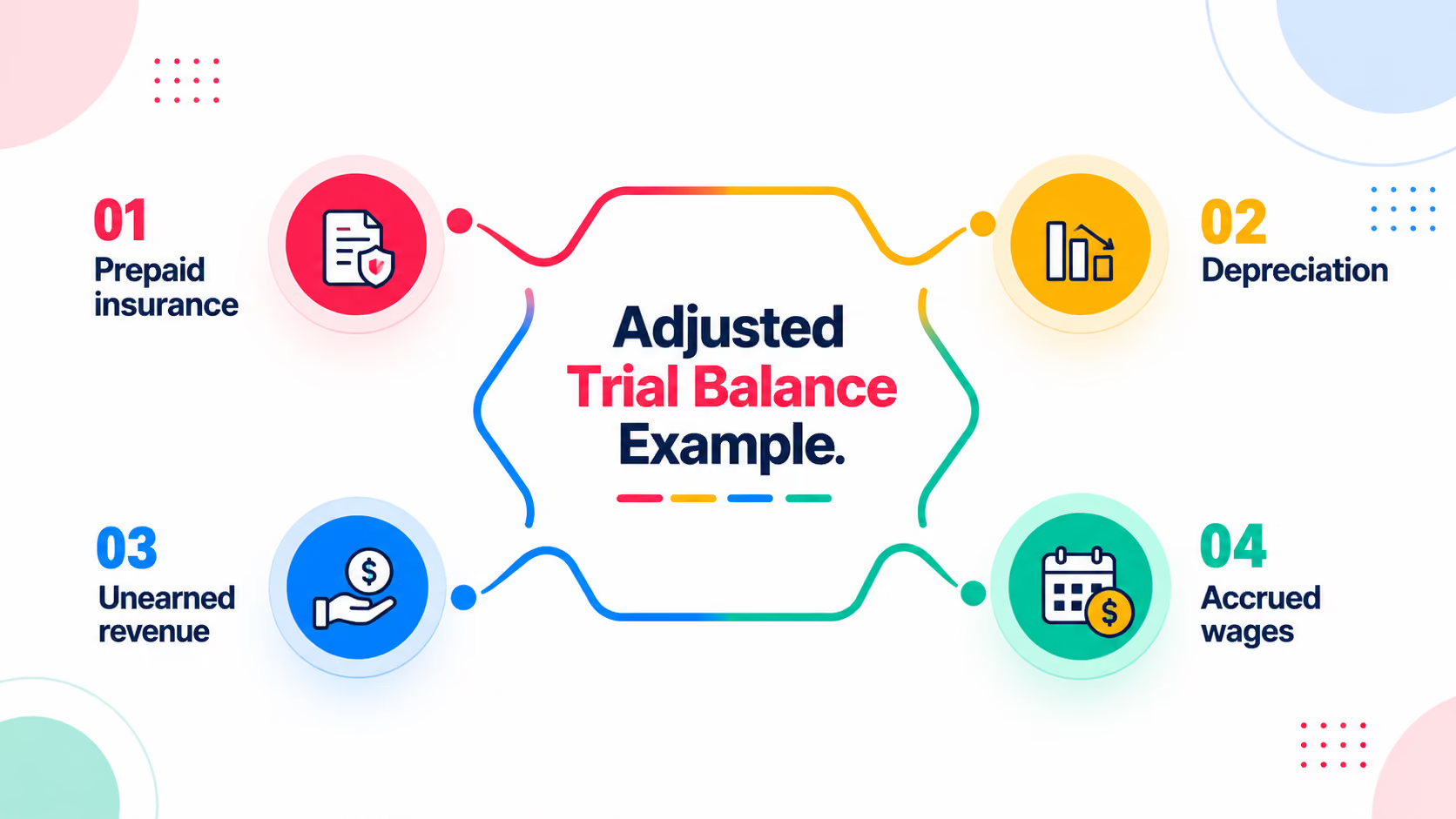
Take a physiotherapy clinic closing the year at December 31. The unadjusted balances are in the first columns. Four adjustments follow:
The unadjusted totals balance at $175,700. The adjustments balance at $14,400. The adjusted totals balance at $184,100. Net income moves from $38,800 on the unadjusted figures to $30,400 after adjustments, because revenue rises by $3,000 and expenses rise by $11,400.
From here the columns carry straight into the statements. Using the clinic's balances:
Assets of $77,500 equal liabilities of $20,600 plus equity of $56,900. If those two sides disagree after you have built the statements, the adjusted trial balance was not the clean starting point you thought it was.
When Is It Prepared and Who Reviews It?
The preparer, usually the bookkeeper or senior bookkeeper, runs the adjusted trial balance once the last adjusting entry is posted. For firms closing monthly, that is every month. For clients on an annual cycle, it is a single report with a long list of adjustments behind it. That is harder to review under deadline pressure.
A reviewer then reads it differently from the preparer. The preparer asks whether the entries were posted. The reviewer asks whether anything is missing. The quickest way to answer that is to compare each balance with the prior period and with the client's activity.
What the Adjusted Trial Balance Feeds
These balances flow into the financial statements. Revenue and expense accounts go to the income statement. Asset, liability and equity accounts go to the balance sheet. After the statements are prepared, closing entries zero out the temporary accounts for the next period.
That is why this report matters in the month-end close. Anything wrong here carries into every report downstream.
Review Checks Before You Sign Off
The trend check catches what the totals cannot. A report that balances can still be missing an entry. Ask whether each account looks right for this client, not only whether the columns agree.
What If the Adjusted Trial Balance Does Not Balance?
If the unadjusted version balanced and the adjusted one does not, the cause is in the adjustments. Check these first:
Compare the adjustment totals first. If total adjustment debits do not equal total adjustment credits, the problem is in the entries and not in the ledger.
Common Adjusted Trial Balance Errors
Adjusted Trial Balance in QuickBooks Online and Xero
Both platforms produce a trial balance report you can run as of a chosen date, and journal entries posted to that date are included. Report names and settings differ between versions, so confirm the current steps in each platform's help documentation. Neither platform flags a missing adjustment. They report what has been posted, so the completeness check stays with the reviewer.
For a worked method on posting the entries themselves, see the pillar guide on adjusting entries.
How Xenett Can Help
A trial balance cannot tell you what is missing. Xenett's AI Financial Review scans the general ledger against 50+ review points, native to QuickBooks Online and Xero, and AI Accruals surfaces prepaid, payroll and deferred revenue items that may still need adjusting. The entries checklist keeps an audit trail so the reviewer can see what was posted.
You still decide what the adjusted balances should be. Xenett shows you where a balance does not match what the ledger activity suggests, so the report you sign off on is complete.
Conclusion
This report is the last checkpoint before the statements. Prepare it from the unadjusted version, post and total the adjustments, and then review the movement account by account. A balanced report is the minimum. A report where every change is explained is the standard.
If you want that review built into your close, start your 14-day free trial (no credit card, setup in under 10 minutes) or book a 15-minute demo.
FAQ: Adjusted Trial Balance
What is an adjusted trial balance?
An adjusted trial balance lists all general ledger accounts and their balances after adjusting entries have been posted. It confirms that total debits equal total credits and is used to prepare the financial statements.
Which trial balance is prepared after adjusting entries are posted?
The adjusted trial balance. It reflects accruals, deferrals and depreciation, so revenue and expenses are stated for the right period.
What is the difference between adjusted and unadjusted trial balance?
The unadjusted trial balance is prepared before adjusting entries and the adjusted one after. The adjusted version includes accruals, deferrals and depreciation, and it is the one used for the financial statements.
How do you prepare an adjusted trial balance?
Start with the unadjusted trial balance, add each adjusting entry to the affected account, include any new accounts, and total the columns. Debits must equal credits, and every account that moved should tie to a specific entry.
What does an adjusted trial balance include?
It includes every general ledger account with its balance after adjustments: assets, liabilities, equity, revenue and expenses. New accounts created by adjustments, such as accrued liabilities or depreciation expense, appear here too.
Is the adjusted trial balance a financial statement?
No. It is an internal working report used to prepare the financial statements. It is not presented to outside users on its own.
Does the adjusted trial balance include closing entries?
No. Closing entries are posted after the financial statements are prepared. The adjusted trial balance still shows revenue and expense accounts with their full period balances.
Frequently Asked Questions About the Adjusted Trial Balance
An adjusted trial balance lists all general ledger accounts and their balances after adjusting entries have been posted. It confirms that total debits equal total credits and is used to prepare the financial statements.
The adjusted trial balance. It reflects accruals, deferrals and depreciation, so revenue and expenses are stated for the right period.
The unadjusted trial balance is prepared before adjusting entries and the adjusted one after. The adjusted version includes accruals, deferrals and depreciation, and it is the one used for the financial statements.
Start with the unadjusted trial balance, add each adjusting entry to the affected account, include any new accounts, and total the columns. Debits must equal credits, and every account that moved should tie to a specific entry.
It includes every general ledger account with its balance after adjustments: assets, liabilities, equity, revenue and expenses. New accounts created by adjustments, such as accrued liabilities or depreciation expense, appear here too.