.svg)

How Practice Management Software Helps in Month-End Close

Ask questions, get summaries, or uncover key takeaways from this article.
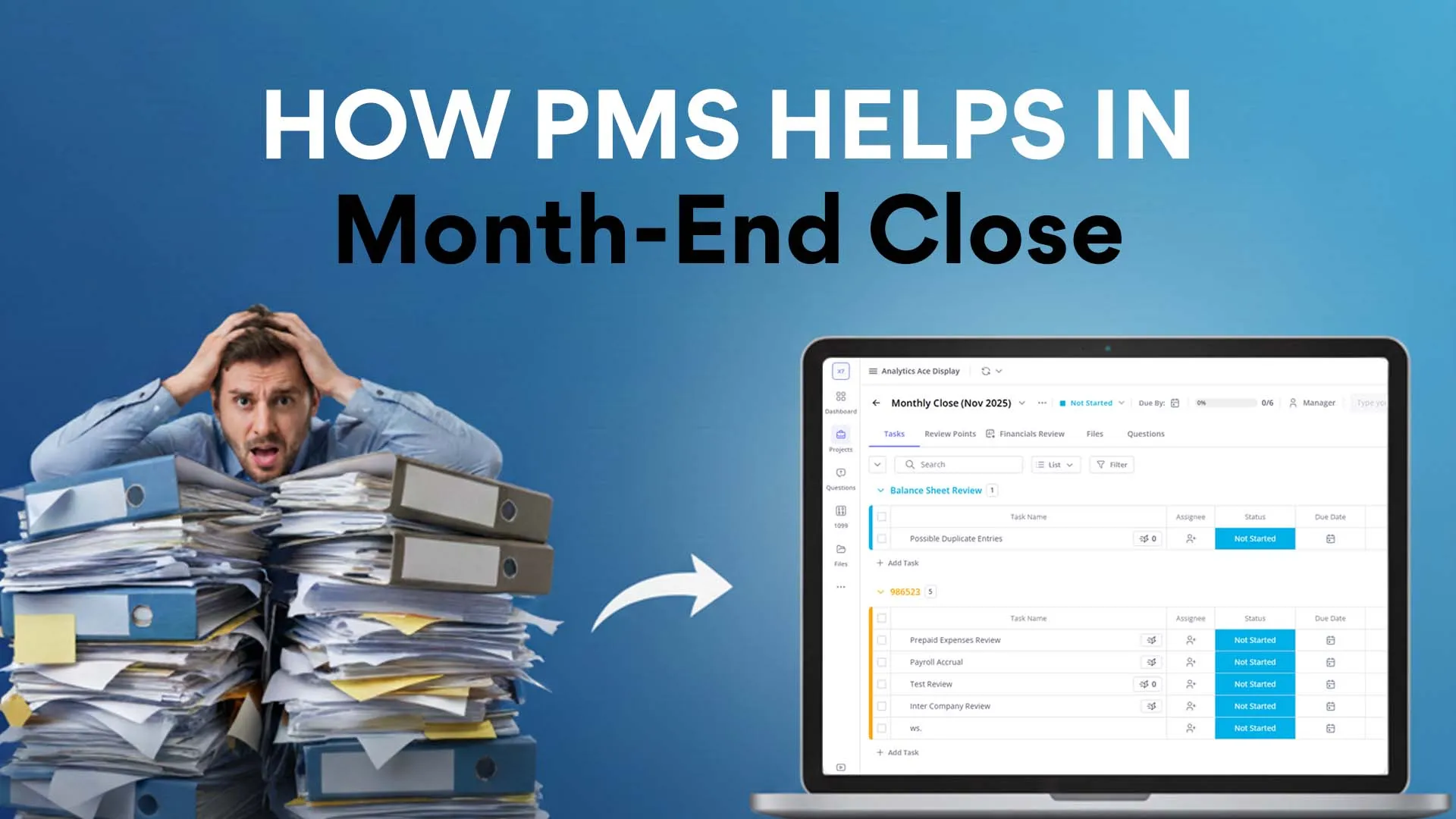
Ever wondered why month-end close feels like an emotional roller coaster nobody signed up for? You start optimistic, then spreadsheets break, reconciliations pile up, someone’s timesheet goes missing, and suddenly it's midnight again.
If this process leaves you asking, “Why is month-end close always such a mess?”, don’t worry. Every accounting firm feels that pinch. And the real game-changer? A smart, modern Practice Management Software (PMS).
Let’s talk about how PMS turns month-end close from a dreaded ritual into something predictable, calm, and almost… enjoyable. Yes, pleasant, or at least not panic-level stressful.
Why Is Month-End Close So Painful for Accounting Firms?
Month-end close is painful because it’s still too manual, too scattered, and too dependent on heroic staff effort. When people juggle dozens of tasks without structure, mistakes are unavoidable.
Your team shouldn’t operate like firefighters putting out spreadsheet flames. Month-end close should feel like a well-rehearsed routine, not a surprise survival challenge.
What Happens When You Don’t Use Modern PMS for Month-End Close?
Without PMS, accounting teams deal with delays, manual errors, bottlenecks, and fatigue. The absence of automation makes every step harder, slower, and more stressful.
This is where many firms unintentionally create risk. Every manual workflow increases the chances of errors, rework, and inconsistencies that drag the close process.
And yes, this is exactly why people search for answers like Challenges in Managing Accounting Firms Without Modern PMS. Because the struggle is real.
What Are the Biggest Month-End Close Challenges PMS Is Built to Fix?
Most challenges stem from outdated tools and inconsistent workflows. PMS introduces automation, structure, and transparency so teams stop relying on guesswork or last-minute pressure.
Month-end close finally becomes repeatable instead of emotionally unpredictable.
Here’s what firms face:
- Too many systems that don’t talk to each other
- Data scattered across emails, spreadsheets, and sticky notes
- Manual reconciliations that steal staff time and sanity
- Billing delays because timesheets come in late
- Repetitive tasks that should be automated
- Staff burnout from avoidable chaos
You deserve better tools. Your team certainly does.
How Does PMS Actually Make Month-End Close Faster?
PMS accelerates month-end close by automating repetitive tasks, centralizing data, and making workflows visible and trackable. It gives accounting firms structure that scales with the workload.
Think of it as the difference between running a kitchen with handwritten recipes versus using a systemized restaurant setup. The meals taste better, arrive faster, and stress goes way down.
Why Does Automation Matter in Month-End Close?
Automation removes the heavy lifting — time entry, workflows, reminders, approvals, and billing. It gives your team back hours, reduces errors, and keeps everything running smoothly.
With PMS, recurring tasks execute automatically. Your team stops performing the same chores every month. Goodbye repetitive busywork, hello efficient close cycles.
How Does PMS Improve Data Accuracy During Month-End?
Data accuracy improves because PMS becomes your single source of truth. Everything tasks, client work, deadlines, billing, and time — lives in one verified system.
When everyone works from the same data, reconciliation becomes faster, cleaner, and far less chaotic. No more hunting through 14 tabs trying to figure out which spreadsheet version is “final-final.”
What Is a 'Continuous Close,' and How Does PMS Help You Get There?
A “continuous close” means you fix issues daily instead of piling them up for Day 1 of next month. PMS enables this by giving real-time visibility into progress, workload, and financial data.
When your dashboards stay live, nothing sneaks up on you. Small problems stay small instead of becoming the reason your month-end takes 10 days.
How Does PMS Standardize the Close Process so Nothing Gets Missed?
PMS creates repeatable workflows. Month-end checklists become templates. Task dependencies guide staff actions. Ownership is always clear. Deadlines stop slipping.
Instead of relying on memory — or worse, one “spreadsheet guru” — the entire firm follows the same predictable process every month.
Why Do US, UK, and Canadian Accounting Firms Need PMS Even More?
Regulations in the US, UK, and Canada continue to tighten, making consistent workflows and documentation essential. US firms face multi-state rules and complex 1099 requirements; UK firms navigate Making Tax Digital and strict VAT reporting; and Canadian firms manage GST/HST differences and CRA audit expectations. PMS gives each region a unified system to track deadlines, standardize engagement processes, manage documentation, and handle multi-currency or multi-location complexity with accuracy. Simply put, PMS keeps firms compliant and efficient even when local requirements differ
What Are the Four Main Ways PMS Speeds Up Month-End Close?
Here’s a clear table to simplify how PMS helps:
How Does PMS Improve Collaboration During Month-End?
Month-end close depends heavily on teamwork. PMS streamlines collaboration by showing who’s doing what, what’s pending, and where bottlenecks exist.
No more guessing whether tasks are complete. No more Slack messages that start with, “Hey, quick question…” and end 45 minutes later.
Why Does PMS Reduce Staff Burnout?
Burnout happens when people work long hours doing tedious tasks under tight deadlines. PMS automates heavy manual work, distributes workloads evenly, and provides clarity.
Your team gets breathing room. And happy accountants? They make the month-end close look effortless.
What Are the Hidden Costs of Not Using PMS?
The hidden cost isn’t just time — it’s opportunities lost, staff turnover, poor client experience, and inconsistent output. Firms pay far more in inefficiency than they realize.
When workflows are messy, everything becomes reactive. Growth slows, deadlines stretch, and errors multiply.
Why Do Modern Firms Consider PMS Non-Negotiable?
Modern firms operate with tighter margins, higher expectations, and growing workloads. PMS ensures firms stay competitive by improving efficiency, accuracy, and client satisfaction.
It’s not optional anymore — it's infrastructure.
Is PMS Worth the Investment?
Absolutely. PMS pays for itself by saving staff time, reducing errors, and improving cash flow. Month-end becomes consistent instead of unpredictable.
Better operations drive better profitability. It’s simple math — the kind accountants love.
Where Does Xenett Fit Into All This?
Here’s the subtle branding you wanted.
Xenett was designed for firms tired of juggling disjointed tools during month-end close. It automates workflows, centralizes data, and brings clarity to every moving part.
Our goal is simple: help firms close faster with fewer headaches. If you want cleaner books, organized workflows, and a more confident team — Xenett fits effortlessly into your processes.
No noise. No fluff. Just a smoother month-end.
Conclusion: Is It Time to Modernize Your Month-End Close?
Month-end close doesn’t have to drain your energy or consume half your calendar. With the right PMS, your firm can eliminate chaos, improve accuracy, and create month-end consistency.
You’ll deliver better results, reduce stress, and build a firm that scales without burning out your team. PMS brings order, automation, and clarity — everything accounting firms need but rarely have.
Month-end close becomes predictable. Clients stay happier. Staff breathe easier.
And your firm grows stronger with every cycle.
Ready to Transform Your Month-End Close?
If you're tired of late nights, manual tasks, and unpredictable close cycles, it's time to upgrade. PMS is no longer a luxury — it’s a competitive advantage.