.svg)

Bookkeeping Pricing Guide: Understanding Service Fees

Ask questions, get summaries, or uncover key takeaways from this article.
Bookkeeping might not be the most glamorous part of running a business, but it’s definitely one of the most important.
Whether you’re a small startup or a big enterprise, keeping your financial records in check is what keeps your business actually alive (and not just “looks fine on paper” alive).
Good bookkeeping means tracking every transaction, keeping your reports accurate, and making sure your financial health doesn’t need a “doctor’s note” when tax season rolls around.
But here’s something most people don’t talk about! How on earth do accounting firms decide what to charge for bookkeeping services?
One firm quotes you an amount that makes sense, and another gives you a number that makes you wonder if they’re including a small yacht in the package.
Understanding how bookkeeping fees are set can really help business owners make smarter choices...not just about who to hire, but also about what value they’re actually getting for their money.
It’s not just about finding the cheapest option; it’s about finding the right fit for your needs and budget.
In this article,
I’ll break down what goes into bookkeeping pricing (spoiler: it’s not random),
The common pricing models firms use, and how you can choose the best bookkeeping partner for your business without getting lost in accountant jargon.
Think of this as your friendly pricing guide...so the next time you’re shopping for an accounting firm, you’ll know exactly what you’re paying for (and why).
Factors Influencing Bookkeeping Fees
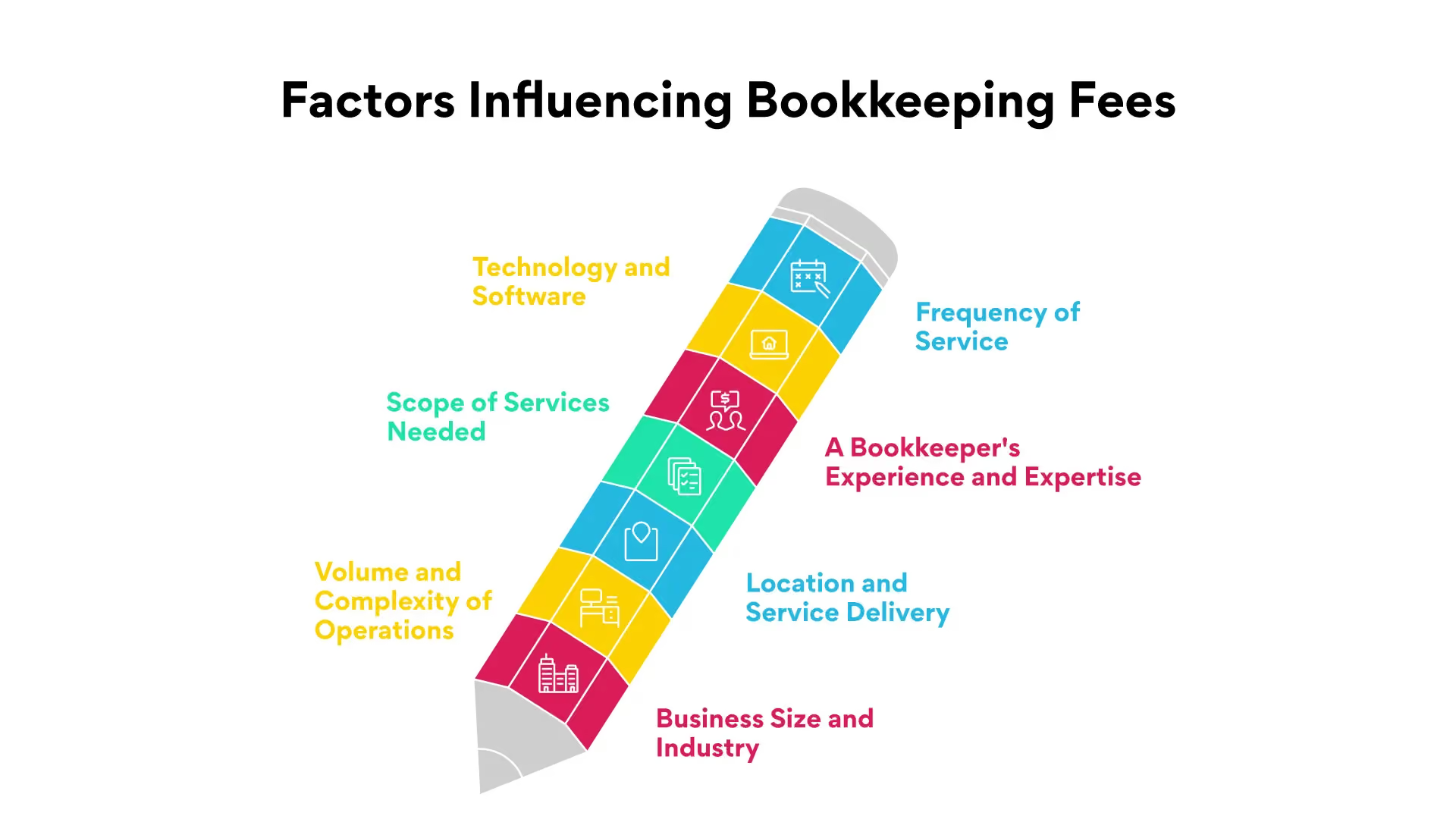
1. Business Size and Industry
When it comes to bookkeeping fees, there’s no one-size-fits-all price tag. It really depends on your business...how big it is, what industry you’re in, and how complicated your finances get.
Bigger businesses mean bigger workloads. More transactions. More records.
More “Wait, where did that expense come from?” moments.
Accountants have to spend extra time digging through statements and making sure every number adds up...and naturally, that extra time comes with a higher price.
Plus, large companies often have multiple revenue streams or locations. That’s a lot of moving pieces...and accountants have to keep track of all of them.
Some companies try to save a bit by hiring an in-house bookkeeper. It’s a smart move in many cases.
The hourly rates might be close to what firms charge, but the bonus?
You get an expert right there with you...someone who can offer advice on things like inventory management, expense tracking, or that mysterious “missing invoice” that somehow vanished into the void.
Now, if you’re running a small business with a simple setup...say, one revenue stream and a few monthly transactions, your bookkeeping bill will likely be much lighter.
Fewer transactions mean less work, and less work means lower fees. Simple math (finally, something in accounting that is simple).
And then there’s the industry factor.
Some fields just have more transactions to handle...and more complexity means higher costs.
Take the transportation industry, for example. Especially if you’re crossing international borders.
That’s a paperwork jungle right there, and your bookkeeping fees will reflect it.
2. Volume and Complexity of Operations
Businesses that handle a large number of monthly transactions are considered high-volume operations.
This directly affects how their bookkeeping fees are structured.
The more transactions there are, the more work there is for the bookkeeper.
On the other hand, businesses with fewer transactions usually pay less because there’s simply less to manage...fewer invoices, payables, receivables, credit card accounts, and bank statements.
A higher work volume also means more complex operations.
This is especially true for companies with multiple revenue streams or different systems for recording income.
Some organizations, like NGOs, operate under financial policies that differ from regular businesses.
Their work involves detailed bank reconciliations and complicated tax preparation, both of which require specialized skills and extra effort from the bookkeeper.
3. Location and Service Delivery
Thanks to technology, bookkeeping has gone digital. Online bookkeeping services have popped up, offering virtual bookkeepers who can handle your accounts for a relatively small fee...no matter how big or small your business is.
These services usually cost less than hiring an in-house bookkeeper. Why?
They don’t provide personalized services, and they have lower overhead than a traditional accounting firm with a full team of employees.
Location also plays a role in pricing.
Firms in big cities or urban areas tend to charge more than those in rural regions. Higher living costs in metropolitan areas drive up overheads, including office rent.
Even a small office space in a city costs way more than a rural office or a virtual setup.
4. Scope of Services Needed
The level of bookkeeping service your business needs directly affects the cost. Generally, there are two types of packages:
Basic and comprehensive.
Basic bookkeeping services cover the essentials.
This includes recording transactions, preparing financial statements, reconciling bank and credit card accounts, and tracking expenses.
Because it’s just the basics, the fees for these services are lower.
Comprehensive bookkeeping services go a step further.
They include all the basic services, plus extras like payroll processing, detailed financial reporting, tax preparation support, and budgeting.
Naturally, the fees for comprehensive packages are higher than those for the basic option.
5. A Bookkeeper's Experience and Expertise
Before hiring an accounting firm for bookkeeping, a prospective client should look closely at the expertise and experience of the professionals they’re considering.
Experienced bookkeepers usually charge higher monthly rates or fixed fees than those with less experience. But the higher cost comes with the reassurance of quality service.
Some bookkeepers and firms offer specialized services because of their expertise in a particular area. For example, they may have in-depth knowledge of nonprofit financial management. This specialized understanding makes them more valuable for certain clients, which is why their fees tend to be higher.
To manage costs, some organizations prefer hiring a full-time bookkeeper. This can help control expenses while still ensuring their accounts are handled properly.
6. Technology and Software
Technology and software have changed the way bookkeeping is done. While some firms still stick to traditional manual methods, this approach can be risky.
Manual data entry increases the chance of errors and can make financial reports harder to manage.
Thanks to technology, modern accounting systems now make a bookkeeper’s job much easier.
These systems simplify data entry and streamline bookkeeping processes. Advanced software automates many tasks, so even large volumes of financial records can be processed quickly and accurately.
Reports are reliable, workflows are smooth, and communication is seamless, which keeps clients happy and saves the company money.
Plus, bookkeepers get extra time to focus on other accounting tasks.
Firms use accounting software like Xenett, QuickBooks Online, Xero, and FreshBooks, which come with powerful features to support these processes.
Of course, using these systems isn’t free...the cost is factored into the bookkeeping fees.
As a result, firms that rely on advanced software often charge higher fees than those using traditional methods.
And the more sophisticated and efficient the system, the higher the cost of bookkeeping services.
7. Frequency of Service
The frequency with which an organization needs bookkeeping services affects the price charged for them. Daily or weekly bookkeeping services cost more than quarterly or monthly services. Given these aspects, a successful business will base its financial budget on a specific plan to utilize, with one being expensive and the other favourable.
Common Bookkeeping Pricing Models
Bookkeepers use different pricing models when offering services. Understanding the prices helps organizations determine which model to use depending on their needs. Let's examine the details below.
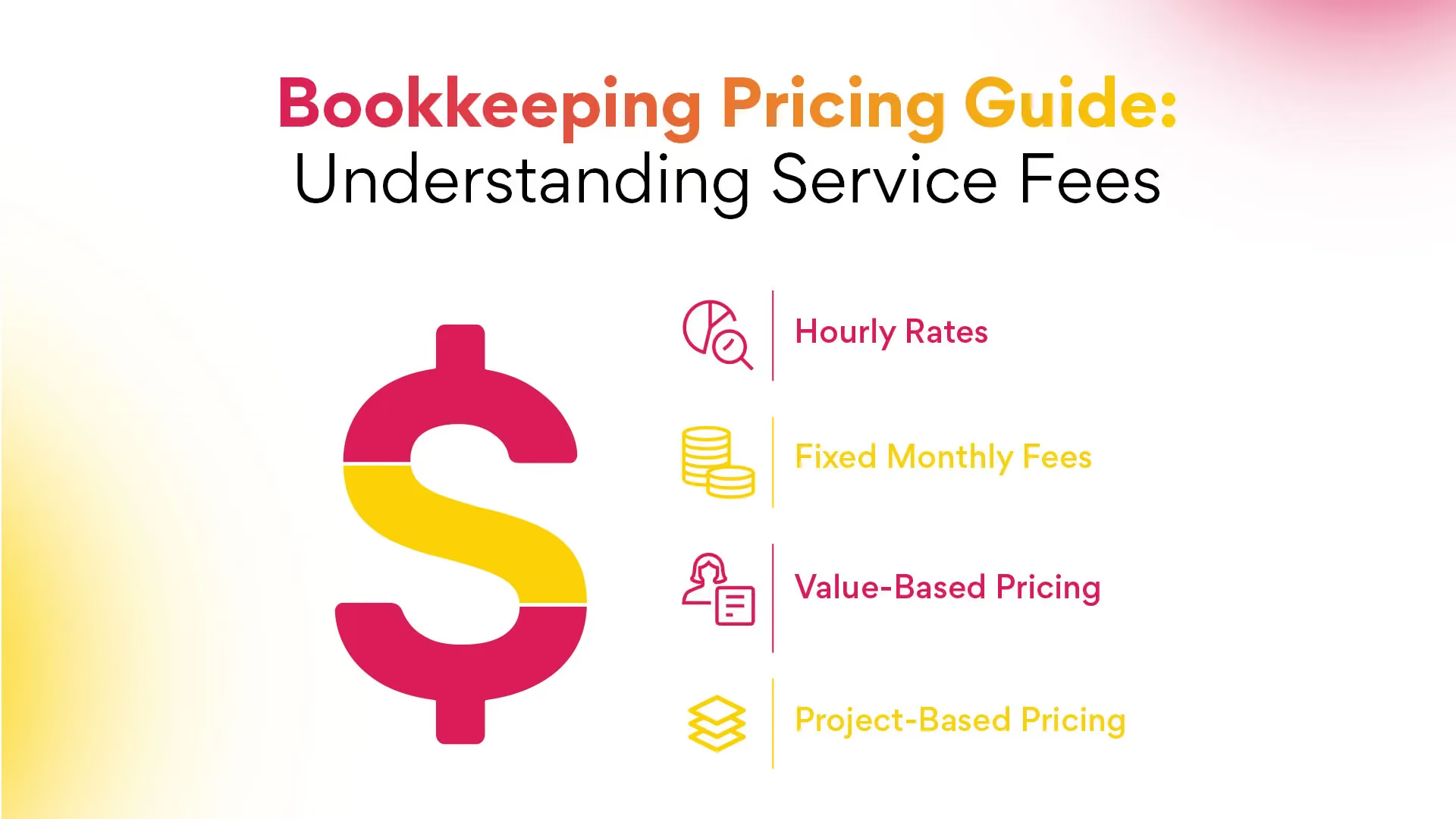
Hourly Rates
Hourly rate pricing is the most common pricing model used by many accounting firms, large or small. Its price anchoring ranges from $30 to $100 for billable hours. However, it's important to note that this price varies depending on the volume of work, the bookkeeper's experience, and the range of services offered.
A big organization with complex accounts will require the bookkeeper to spend more time checking records and validating data. As a result, the fee might exceed the stated average rate.
Small to medium-sized services have less complex needs, and their scope of operations demands basic bookkeeping services. Thus, the hourly rate might be within the stated price range.
The advantage of this model is that you have fixed-fee pricing for the time the services are offered. The downside of hourly pricing is that if an organization's needs change every month, it might be hard to allocate an exact budget for bookkeeping since the time used for the company changes.
Fixed Monthly Fees
Some public accountants offer a flat-rate fee every month for agreed-upon bookkeeping services. Such a plan works best for an organization with a consistent workflow. However, if the time and services offered exceed the set limit, additional charges are applied. Normally, the average rate for the fixed monthly fee ranges from $300 to $2,500 per month.
This model is ideal for businesses that need regular bookkeeping accounting services but do not require a full-time bookkeeper. Since it offers predictable costs, a business can determine the projected budget for its firm, making it ideal for estimating the budget for a project.
Due to the long-term association, the model is associated with cultivating a good working relationship with the accounting firm. Through this relationship, the business owner might benefit from discounted offers and advisory services from the firm.
Value-Based Pricing
The value-based pricing tier is based on the number of financial transactions processed or value received from services offered. Businesses with varying transactional volumes might find this model beneficial as they only pay for the services they utilize.
Though efficient, especially in developing a budget, a clear understanding of the service levels being delivered needs to be clear. This approach is suitable for specialized bookkeeping services.
Project-Based Pricing
This pricing strategy is ideal for a business that needs bookkeeping services on a one-off basis. These might include setting up a new accounting system, auditing, or performing a one-time financial cleanup.
The bookkeeper charges a fixed price for the specialized service offered. However, this pricing tier does not cover ongoing bookkeeping support.
Choosing the Right Bookkeeping Service for Your Practice
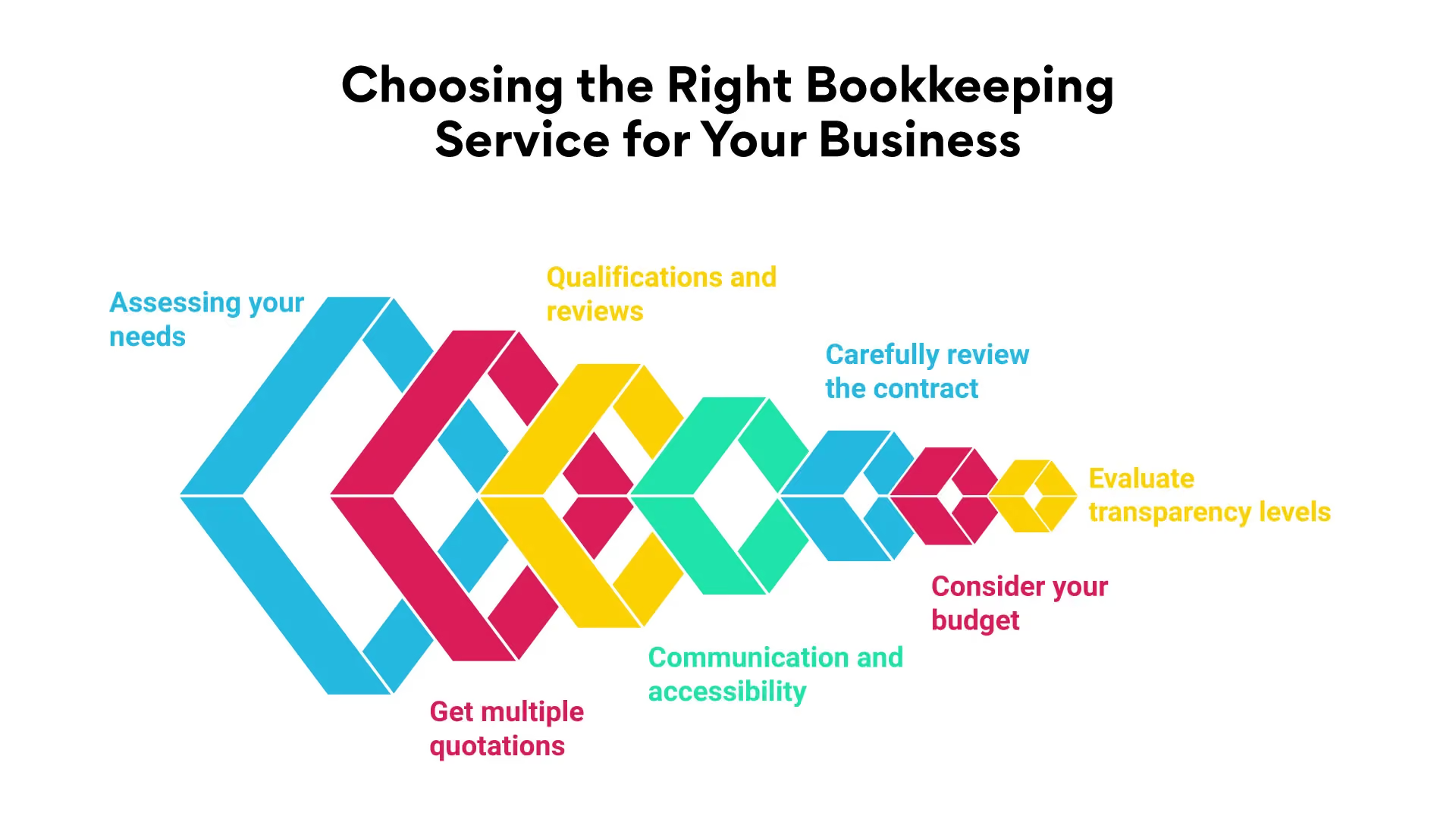
Several factors other than cost should be considered for small and larger businesses before choosing which accounting firm to use for your range of service. Here are a few aspects:
Assessing your needs
When choosing a bookkeeping firm, it is important to consider your company's needs. This will determine whether you need a basic tier or complementary service package and help set the monthly accounting costs associated with bookkeeping.
Get multiple quotations
Remember to look into several accounting firms in the industry, both virtual and physical. Do not settle on the first few that offer their services since there might be better firms with exceptional services and less expensive options for your company.
Qualifications and reviews
Before selecting a company, be careful not to be swayed by the low bookkeeping pricing package. In some cases, cheap can be expensive in the long run. Evaluate their expertise and experience in the field of bookkeeping. Additionally, check into their reviews online and from various clients in the industry.
Communication and accessibility
Clear communication is key to avoiding misunderstandings. It also facilitates collaboration with other parties affiliated with the company accounts.
A professional bookkeeper should create avenues for a client to contact him or his firm to learn the progress of his account.
To facilitate this, an accounting firm can open a client portal where clients can interact and share important financial data related to the company.
Additionally, for a firm with a wider client base, establishing a client portal clearly distinguishes information from different parties.
The ideal client should also be assured of accessibility by the business bookkeeper, especially if they have a complex task and want continuous reports on progress.
A bookkeeper should guarantee accessibility through a client portal or mobile devices.
Providing accessibility can also work to the advantage of the accounting business, as customers can contact them for extra tasks.
Carefully review the contract.
Ensure you understand all the terms and conditions before signing the agreement.
This includes the bookkeeping tasks to expect, payment schedule, pricing method used (e.g., is it a cost per month or hourly based), payment process, and the actual deadline for the bookkeeping service.
One should not rush to sign any agreement without reading it through.
You can also seek legal advice from a professional.
Otherwise, you might not have the chance to rectify any misunderstandings that might arise, prompting poor service delivery or additional payments.
Consider your budget
Ensure the selected bookkeeping pricing package aligns with the company's budget allocation and meets market standards.
A consistent or fixed-rate pricing is a good option for organizations with fixed budget allocations.
Evaluate transparency levels
A professional bookkeeper will never shy away from answering your questions regarding their services or the common pricing structures available in the market.
On the other hand, a dishonest one will exaggerate simple matters such as their client base and bookkeeping practices.
Use these questions to judge the bookkeeper's transparency levels and determine whether to use their services.
Aspects to be Cautious About
- Be cautious of hidden fees: Ensure all fees are outlined in the contract according to the pricing structure discussed with the bookkeeper. Ask for the firm's bookkeeping pricing template to evaluate the offers personally. Be cautious when offering additional services since custom pricing for these services might apply when finalizing payment.
- The lack of communication: A bookkeeper who is not responsive to your queries or does not have open lines of communication might present poor results in their finished service.
- Unrealistic low prices: Although we enjoy low prices for services received for regular bookkeeping tasks, caution should be exercised if the charges are below the standard pricing structure for complex tasks. This might indicate low experience and poor bookkeeping practices.
Conclusion
An ideal client should start by understanding the standard pricing for bookkeeping services in the market.
This helps make smarter decisions when planning your budget.
By carefully considering factors like your business’s complexity, the range of services you need, and the bookkeeper’s experience, you can make sure you’re getting real value for your money.
Focus on finding a reliable bookkeeper from the options available in your target market.
Remember, a good bookkeeper isn’t just an expense...they’re an investment.
The right professional can have a big impact on your business’s success and keep your clients satisfied.